


How to Collaborate Effectively With Developers as a QA Tester

Strong collaboration between QA testers and developers is one of the most important ingredients of a successful software team. When communication flows smoothly, defects are found earlier, releases are more stable, and the entire team works with greater confidence. But for new QA testers—especially those entering DevOps environments—learning how to collaborate effectively can feel overwhelming.
This guide breaks down practical, real‑world strategies to help you build trust, improve communication, and work seamlessly with developers from day one.
Why Collaboration Matters in Modern QA
In traditional development models, QA often worked at the end of the process. Developers built features, then “threw them over the wall” to testers. That approach doesn’t work anymore.
Today’s Agile and DevOps teams rely on:
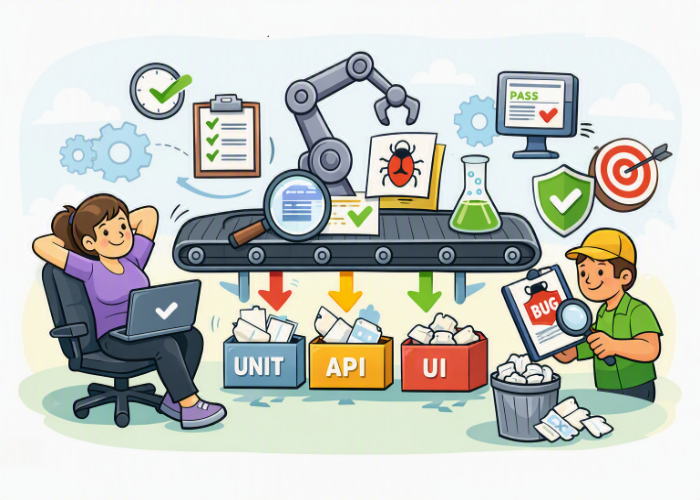
- Continuous integration
- Rapid feedback loops
- Shared responsibility for quality
- Frequent releases
This means QA and developers must work together closely—not as separate departments, but as partners.
Effective collaboration helps you:
- Prevent defects instead of just detecting them
- Understand features deeply before testing
- Reduce misunderstandings and rework
- Build a culture of quality across the team
- Deliver faster, more reliable releases
Build Trust Through Clear, Respectful Communication
Developers and testers often approach problems differently. Developers focus on building solutions; testers focus on finding risks. When these perspectives clash, communication becomes even more important.
Tips for communicating effectively:
-
Be specific, not vague.
Instead of “The feature is broken,” say “The login button doesn’t respond after clicking on mobile Safari.” -
Use neutral, factual language.
Avoid blame. Focus on behavior, not people. -
Ask clarifying questions early.
Developers appreciate testers who seek understanding before raising issues. -
Share context, not just symptoms.
Include logs, screenshots, steps, and environment details. -
Listen actively.
Developers may explain technical constraints that shape how you test.
Clear communication builds trust—and trust makes collaboration easier.
Participate Early in the Development Process
One of the biggest shifts in DevOps is that QA is involved from the very beginning.
Ways to contribute early:
- Review user stories and acceptance criteria
- Identify risks before coding begins
- Ask questions about edge cases and user flows
- Help refine requirements for clarity
- Suggest testability improvements
Early involvement prevents defects and reduces last‑minute surprises.
Pair With Developers to Strengthen Understanding
Pairing is one of the most effective collaboration techniques. It helps testers understand how features are built and gives developers insight into how testers think.
Pairing activities include:
- Reviewing code changes together
- Walking through new features before testing
- Exploring edge cases as a team
- Discussing how automation can support the feature
- Sharing knowledge about tools, frameworks, or environments
Pairing builds empathy and reduces misunderstandings.
Write High‑Quality Bug Reports Developers Appreciate
A good bug report saves time. A vague bug report wastes it.
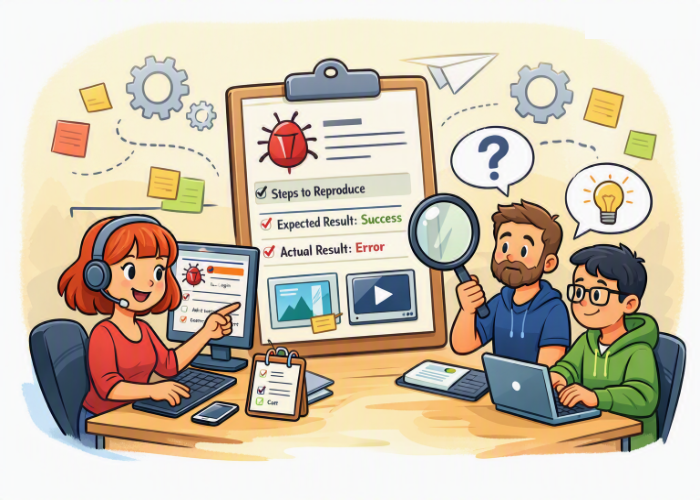
A developer‑friendly bug report includes:
- Clear title
- Step‑by‑step reproduction
- Expected vs. actual results
- Screenshots or recordings
- Logs or console output
- Environment details (browser, OS, build number)
- Frequency (always, sometimes, rare)
The goal is simple: make it easy for developers to reproduce and fix the issue quickly.
Understand the Developer Workflow
Developers often work within constraints testers don’t see. Understanding their workflow helps you collaborate more effectively.
Key areas to learn:
- How version control works (Git basics)
- How branches and pull requests are used
- How CI/CD pipelines run automated tests
- How environments are deployed
- How feature flags or toggles work
When you understand the developer workflow, you can align your testing strategy with their process.
Support Continuous Testing in DevOps Pipelines
In DevOps, testing doesn’t happen once—it happens continuously.
Ways QA supports continuous testing:
- Creating stable automated tests
- Maintaining test data and environments
- Monitoring pipeline failures
- Providing fast feedback on build quality
- Helping identify flaky tests or unstable environments
Your role is to ensure quality checks run smoothly throughout the pipeline.
Give Feedback Constructively and Receive It Gracefully
Collaboration thrives when feedback is respectful and solution‑focused.
Giving feedback:
- Focus on the impact, not the mistake
- Suggest improvements instead of criticizing
- Use “we” language to reinforce teamwork
Receiving feedback:
- Listen without becoming defensive
- Ask questions to understand the suggestion
- Apply feedback to improve your testing approach
Healthy feedback loops strengthen the entire team.
Build Relationships Beyond Work Tasks
Collaboration isn’t only about processes—it’s also about people.
Ways to build rapport:
- Join team discussions
- Celebrate wins together
- Share knowledge openly
- Offer help when someone is stuck
- Be approachable and positive
Strong relationships make communication easier and reduce friction during stressful releases.
Final Thoughts
Effective collaboration between QA testers and developers is essential in modern software teams. It’s not just about finding bugs—it’s about building quality together. When you communicate clearly, participate early, understand the developer workflow, and approach teamwork with empathy, you become a trusted partner in delivering reliable, user‑focused software.
As a QA tester, your voice matters. Your insights matter. And your collaboration helps shape the success of every release.

🗨️ Reader Comments