


What Is QA in DevOps? A Simple Guide for New Testers

Introduction
If you’re new to software testing, you’ve probably heard the term DevOps everywhere — and maybe wondered where QA fits into it. The good news is that QA plays a central role in DevOps. In fact, DevOps can’t succeed without quality at every stage.
This guide breaks down what QA in DevOps really means, why it matters, and how new testers can thrive in a DevOps‑driven team.
What Is DevOps?
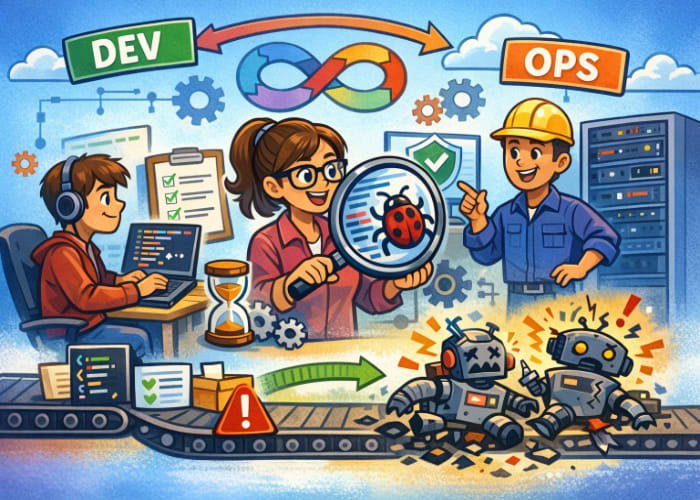
DevOps is a way of working that brings development (Dev) and operations (Ops) together to deliver software faster, more reliably, and with fewer bottlenecks. Instead of working in separate silos, teams collaborate continuously.
Key DevOps goals include:
- Faster releases
- Better communication
- Automated workflows
- Continuous improvement
But none of this works without quality. That’s where QA comes in.
What Does QA Mean in a DevOps Environment?
In traditional software development, QA often happens late in the process — usually right before release. DevOps flips that model. QA becomes continuous, collaborative, and integrated into every stage of the pipeline.
Here’s what that looks like:
1. QA Starts Early
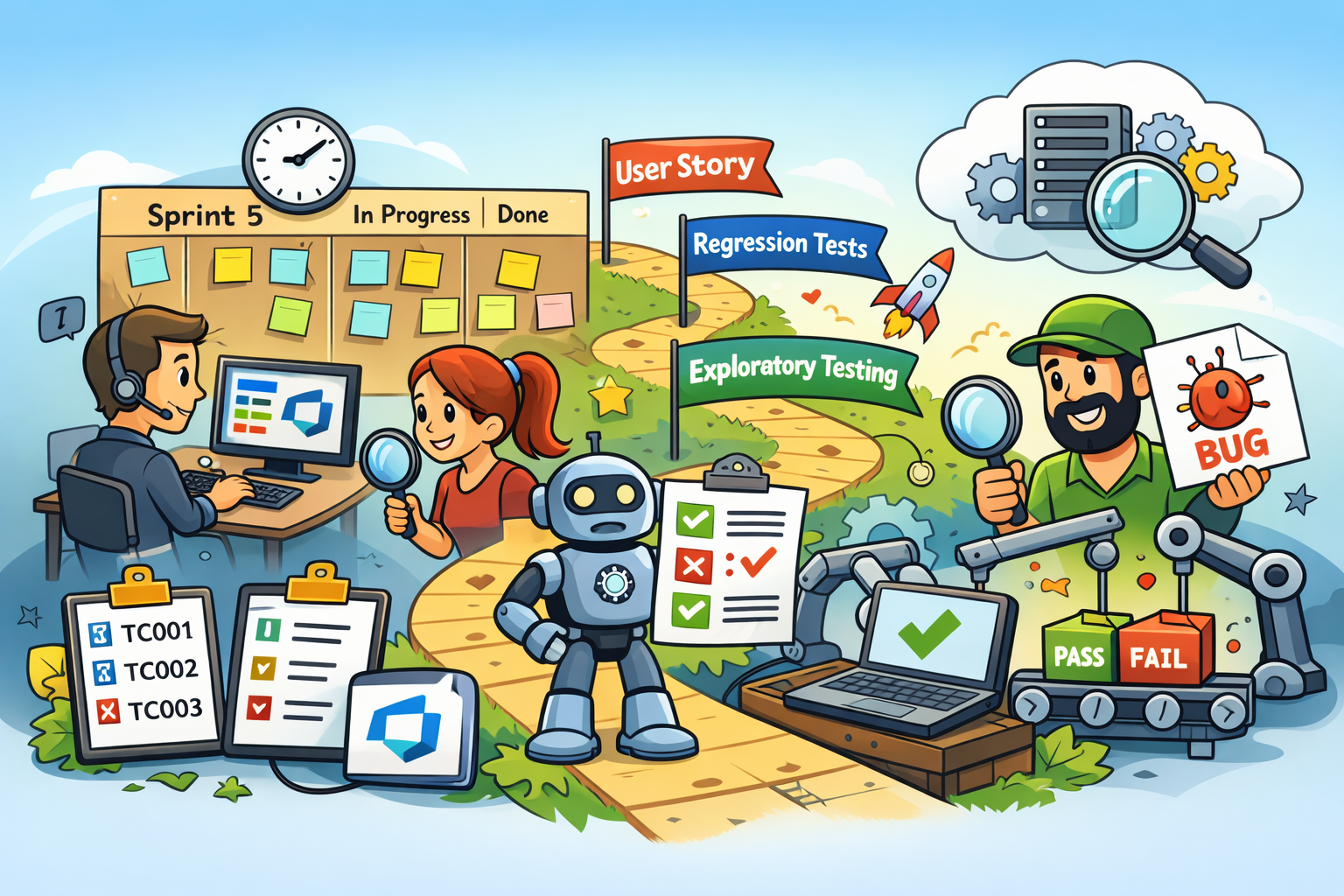
Testers review requirements, user stories, and acceptance criteria before development begins. This prevents defects instead of just detecting them.
2. QA Works Closely With Developers
Testers and developers collaborate daily, share feedback quickly, and solve issues together instead of handing work off in long cycles.
3. QA Supports Continuous Testing
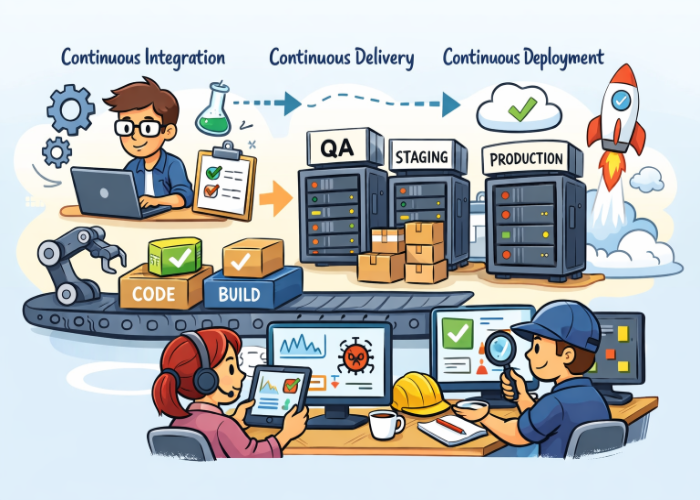
Automated tests run throughout the CI/CD pipeline, giving teams fast feedback on code quality.
4. QA Helps Improve the Pipeline
Testers help refine test environments, improve test data, and identify gaps in automation or process flow.
5. QA Focuses on Quality Culture
In DevOps, quality is everyone’s responsibility — but QA leads the way by promoting best practices and risk‑based thinking.
Why QA Is Essential in DevOps
QA brings structure, clarity, and confidence to fast‑moving DevOps teams. Here’s why it matters:
- Prevents defects early, reducing rework
- Improves release stability through continuous testing
- Builds trust between teams by providing reliable feedback
- Supports automation, which is the backbone of DevOps
- Ensures user experience stays front and center
Without QA, DevOps becomes fast — but fragile.
What Skills Do QA Testers Need in DevOps?
You don’t need to be an automation expert on day one. Start with the fundamentals and grow from there.
Core skills for beginners:
- Understanding of the SDLC and DevOps concepts
- Ability to write clear test cases and bug reports
- Familiarity with Agile ceremonies and workflows
- Basic knowledge of CI/CD pipelines
- Curiosity and willingness to collaborate
Skills to build over time:
- Test automation (Selenium, Playwright, Cypress, etc.)
- API testing
- Version control (Git)
- Working with pipelines (Azure DevOps, GitHub Actions, Jenkins)
- Performance and security testing basics
Think of DevOps as a journey — not a checklist.
How QA Contributes Throughout the DevOps Pipeline
Here’s a simple view of where QA fits in each stage:
Plan
Review requirements, identify risks, and clarify acceptance criteria.
Code
Collaborate with developers, pair test, and prepare test data.
Build
Ensure automated tests run successfully and provide fast feedback.
Test
Execute manual and automated tests, validate functionality, and report defects.
Release
Verify release readiness and ensure quality gates are met.
Monitor
Analyze production issues, user feedback, and performance metrics to improve future releases.
QA is present from start to finish — not just at the end.
Tips for New Testers Working in DevOps Teams
- Ask questions early to avoid misunderstandings later.
- Pair with developers to learn how features are built.
- Start small with automation — even one test is progress.
- Focus on user impact, not just test steps.
- Share insights openly — DevOps thrives on communication.
Your voice matters, even if you’re new.
Final Thoughts
QA in DevOps is all about continuous quality, collaboration, and fast feedback. As a new tester, you play a key role in helping your team deliver reliable, user‑friendly software at speed.
You don’t need to know everything right away. Start with the basics, stay curious, and grow your skills step by step. DevOps is a team sport — and QA is one of the most important players.


🗨️ Reader Comments